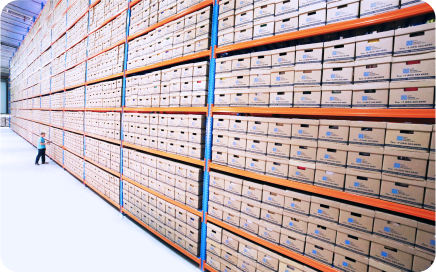
























Production that comes to a halt because a single component is missing. Warehouse shelves filled with goods no one dares to use because the data cannot be trusted. Scrap and rework that slowly eat away at your margins. If you recognize even one of these, you are already paying for production waste.
The good news is that much of this waste does not require new machines or large Lean programs. It requires control of inventory management, data, and standardized processes in the interaction between purchasing, warehouse, picking, and production.
In this article, we review:
- Where production waste typically occurs in the material flow
- KPIs and data that make waste visible (and prioritizable)
- Concrete initiatives that can deliver results within 2–4 weeks
- A simple 90-day plan that can be implemented without disrupting operations
The point is simple: When materials, locations, and master data work together, you get fewer stoppages, fewer errors, and an inventory that actually supports production.
What Is Production Waste – and Where Does It Occur Between Warehouse and Production?
Production waste is everything you spend time, money, and capacity on that does not create value for the customer. In an SME, it is usually less about “lazy employees” and more about unclear processes, inaccurate data, and a material flow that is not designed for daily operations. When data is unreliable, people start compensating with extra checks, extra inventory, and constant firefighting. It may seem reasonable locally, but it creates waste overall.
The interaction between purchasing, warehouse, and production is typically where things break down: Purchasing orders based on gut feeling, the warehouse lacks fixed rules for receiving and locations, and production only discovers the error when the order reaches the shop floor. The result is waiting time, extra transportation, changeovers, scrap, or rework.
The Most Relevant Lean Waste Types in an SME
You can easily use Lean waste types as a troubleshooting checklist without turning it into a rigid philosophy. The most relevant ones often appear directly in your material flow:
- Waiting time: Production stops because materials are missing or cannot be found
- Overproduction: You build or order “just in case,” which leads to obsolescence
- Inventory: Capital tied up and hidden errors because no one fully trusts the numbers
- Transport/motion: Unnecessary trips for parts due to unclear locations
- Errors/rework: Wrong picking, incorrect BOM revision, wrong batch
When you can connect specific incidents to these categories, production waste suddenly becomes measurable instead of just “a feeling.”
Practical Example: When BOM, Variants, and Locations Don’t Align
A classic scenario: The bill of materials (BOM) has not been updated after a variant change. Picking receives a picking list that is “almost correct,” and the employee compensates by choosing something that looks similar. Production starts, discovers the deviation late, and now you face a stoppage, rebuilding, or scrap. The waste is not just the material, but also the time, extra handling, and the disruption that spreads throughout the rest of planning.
It becomes worse if you do not have clear traceability on batches/lots or if locations are not clearly defined. Then you cannot quickly determine where the correct component is — or whether it even exists. And you end up ordering again “just to be safe.”
How to Identify Production Waste: KPIs and Data-Driven Prioritization
You do not need 30 KPIs on a dashboard. You need a few key figures that clearly show where money is disappearing. The trick is to connect warehouse, purchasing, and production in the same overview, so you do not optimize one department while pushing the problem to the next.
Start by identifying the 20% of items and processes that create 80% of the problems (Pareto as a rule of thumb). This is almost always where you get the highest return on every hour invested.
KPIs That Reveal Hidden Waste
If you need a starting point, measure the things that result in stoppages, scrap, or tied-up capital. Here is a simple list that typically works in SME production:
1. Scrap percentage and rework (hours and/or cost)
2. Picking errors (e.g., deviations per week or per order)
3. Stockouts/backorders on critical components
4. Inventory days and signs of obsolescence
5. Simplified OEE estimate: How often does the line stop due to materials versus machines?
The key is not perfection, but consistency. When you can see that scrap and stoppages are linked to specific items, suppliers, or locations, you know exactly where to focus first.
Practical Mapping: ABC Classification and Master Data Audit
ABC classification is a straightforward way to focus. A-items are typically expensive, critical, or frequently used. These are the ones that deserve your best data and tightest processes. At the same time, you should conduct a master data audit, reviewing the fields that most often create production waste when they are incorrect.
In particular, review: units of measure, lead times, min/max levels, locations, BOM revisions, and MRP parameters. If you work with replenishment, make sure you have control over the reorder point (ROP) for your most important components. Small errors here can cause major fluctuations in both inventory and production.
Concrete Initiatives That Quickly Reduce Production Waste
Before investing in new systems or major restructuring, standardize what you are already doing. Many SMEs achieve quick wins by making fewer warehouse processes “optional”: the same way to receive goods, the same way to assign locations, the same way to pick and register. This makes errors less frequent and easier to detect.
The goal is to avoid both overstocking (which hides errors) and stockouts (which cause stoppages). When the process is consistent every time, deviations become visible — and therefore improvable. Without standards, deviations simply become everyday routine.
Quick Wins Within 2–4 Weeks
If you want to see results quickly, start with what reduces errors in the physical flow from day one. Typical practical initiatives include:
- Fixed locations and clear signage (so new employees can also find their way)
- Barcoding and scanning at receiving and picking (preferably with handheld scanners)
- FIFO/FEFO where relevant, so older items are not forgotten
- Receiving and picking control for A-items (not everything — just the critical ones)
It may sound basic, but it works because it removes guesswork from daily operations. And guesswork is often what turns into scrap, rework, and stoppages.
Control Mechanisms That Stabilize Flow Long-Term
Once the basic discipline is in place, you can stabilize operations with simple control mechanisms: min/max levels, safety stock, and reorder points based on actual lead times (not wishful thinking). Additionally, kanban and cycle counting can create stability because deviations are discovered continuously instead of being “found” during annual inventory counts.
If you use planning in an ERP or a WMS, schedule time for ongoing parameter adjustments. MRP is not “set and forget.” It must stay close to reality — otherwise it creates production waste in the form of both over-purchasing and shortages.
Step-by-Step Implementation Without Disrupting Operations
Most improvement initiatives fail because they become too large, too fast. Instead, treat it as a controlled pilot project: one product group, one production line, or one customer segment. This allows you to test standards, training, and registration without paralyzing the entire business. When it works, you roll it out further.
Here is a simple 90-day plan you can use as a framework:
Week 1–2: Extract data, select the top five waste sources (KPIs + shop floor input), and choose a pilot area
Week 3–6: Introduce standards for receiving, locations, and picking in the pilot (including registration)
Week 7–10: Adjust min/max levels, lead times, and replenishment settings for A-items in the pilot
Week 11–12: Measure before/after results, lock in standards, and plan the next rollout area
The most important thing is to define ownership: who updates master data, who approves changes to bills of materials, and who follows up on KPIs. Without accountability, it ends up as “something we tried once.”
Get More Inventory Insights: Subscribe to Our Monthly Newsletter
Production waste rarely disappears with a single initiative. It decreases when you build a rhythm: measure, improve, standardize, repeat. And the better you become at it, the more value you gain from your warehouse, production, and purchasing.
Would you like more practical tools to reduce production waste in real life? Subscribe to our monthly newsletter, where we share short guides, templates, and insights about warehouse management, planning, and operations in SMEs. If you are curious about tools and cases, you can also learn more about Rackbeat and how structure in inventory and flow can make everyday operations more stable: